

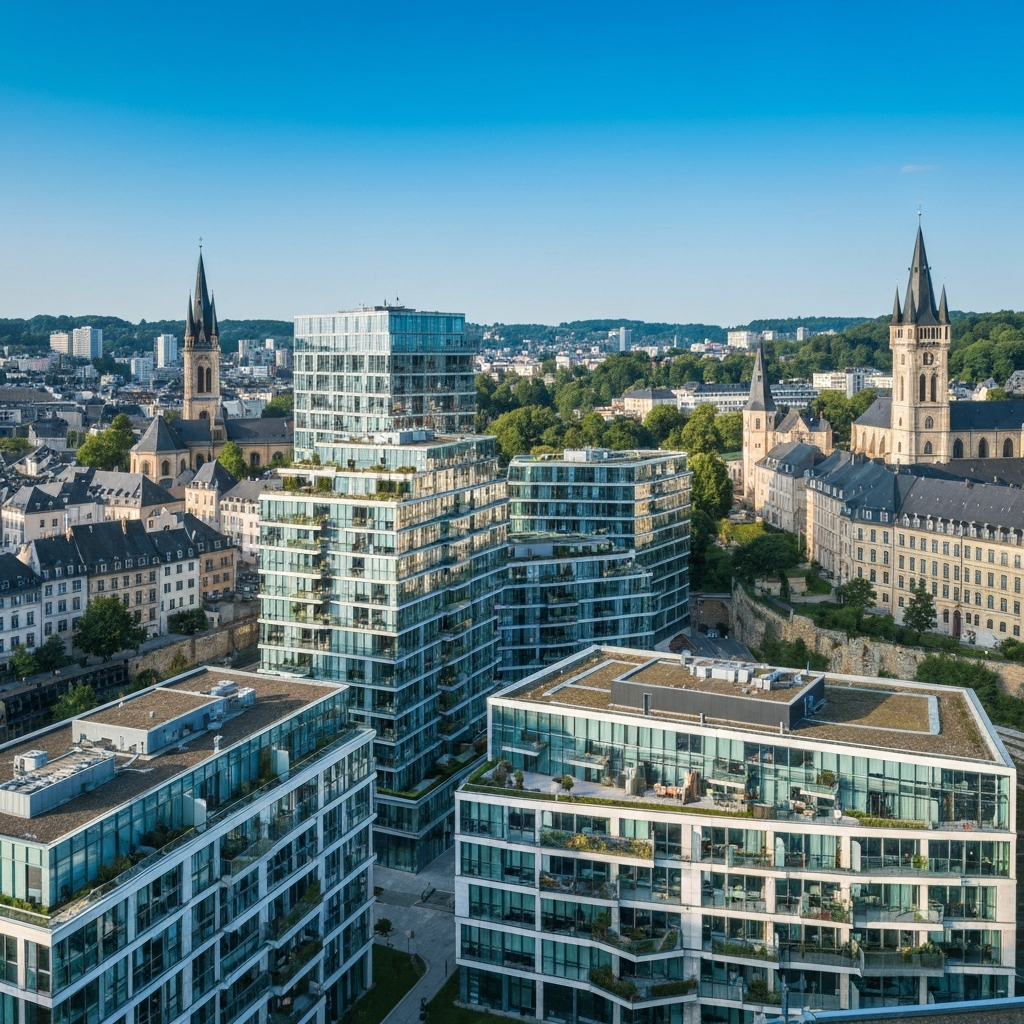
Luxembourg City’s real estate market is experiencing notable shifts, influenced by economic factors, policy changes, and new developments. Understanding these trends is essential for prospective buyers, renters, and investors.
Market Trends and Property Prices
After a period of rapid growth, the market has entered a phase of stabilization. As of early 2026, the average price for existing apartments in Luxembourg City is approximately €8,000 per square meter, reflecting a slight annual decline of 1.4%. This adjustment follows a significant surge in prices between 2015 and 2022, where values increased by about 80%, peaking in 2022 before experiencing a correction.
Neighborhood-specific data reveals variations: Belair averages €13,500/m², Gasperich around €12,233/m², and Kirchberg approximately €12,000/m². These figures indicate a diverse market where location significantly impacts property values.
Rental Market Dynamics
The rental sector remains robust, with national average rents reaching €30.57 per square meter per month as of January 2026, marking a 6.26% increase from the previous year. In Luxembourg City, rental yields average 4.8%, with studios offering the highest returns, ranging from 5.3% to 6.2% gross.
Upcoming Developments
Several significant projects are set to reshape the city’s housing landscape. The “Nei Hollerich” neighborhood aims to accommodate 4,500 residents and create 5,000 jobs through mixed-use buildings, including residential units, offices, and retail spaces. This development emphasizes sustainability and quality of life.
Additionally, the Esch-Belval area is undergoing transformation, with over 2,300 units planned through 2028. The Gare Urban Project will add more than 1,200 residential units, primarily from 2027 onwards. These initiatives are part of a broader effort to address housing demand and urban growth.
Innovative Housing Solutions
In response to the housing shortage, innovative approaches like 3D-printed homes are being explored. A pilot project in Niederanven utilized mobile concrete printing technology to construct a 47-square-meter dwelling in just four weeks. This method offers a potential solution for rapid, cost-effective housing development.
Conclusion
Luxembourg City’s real estate market is in a period of transition, characterized by price stabilization, active rental demand, and ambitious development projects. Staying informed about these trends is crucial for making well-informed decisions in this evolving landscape.